
























































1MG FlippingBooks
Building Meaningful Connections
Ben Jhoty
Telstra’s Regional Advisor Network is meeting the unique communication needs of people in rural and remote areas, allowing communities and towns across the country to thrive.
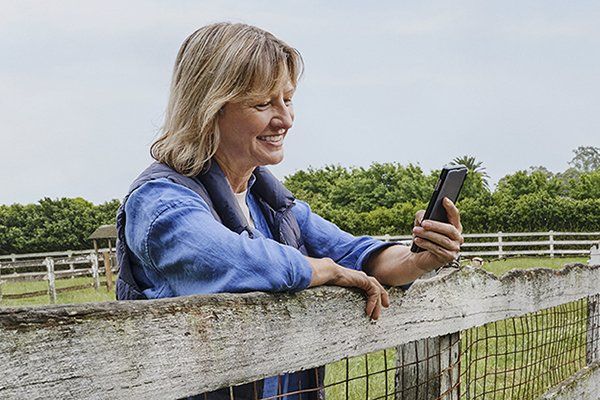
When a storm hit Melinda Downs, a remote cattle station near Cloncurry in northwest Queensland, Tara Locke was home with her youngest child. The storm knocked out the property’s power and mobile coverage and with her husband and two eldest children in town, Locke could only watch as night fell and flash flooding cut access to the property.
“There was water everywhere and I had no way of letting my husband know not to come home from town,” says Tara, a professional cattle and kid wrangler. “It had been a few hours. It was getting dark. I didn’t know where they were and I couldn’t get onto them. I didn’t know if they were okay. I was worried sick.”
Afterwards Tara made a passionate speech about the ordeal at Cloncurry Town Hall. Jonathon New, a senior network engineering specialist who’s part of Telstra’s Regional Advisor Network, heard the speech and was determined to help the family.
“I kind of knew roughly where Tara was living so I did my calculations with our software and we were able to get mobile coverage from a town that’s about 57km away from the property.”
Tara says her family no longer feels so vulnerable and isolated and credits New for helping make their lives easier and more secure. “I was blown away that he actually cared,” she says.
Stories like Tara’s are common in regional Australia, where distance and isolation make communication challenging. Recognising the unique needs of customers in rural and remote areas, Telstra launched the Regional Advisor Network (RAN) two years ago.
“The need for this team and this project has come from a very clear recognition that our customers in regional communities want more in terms of assistance outside of what we can offer them in a Telstra store,” says Michael Marom, Regional General Manager for Northern NSW, who’s also on the RAN project. “A lot of our customers live a long way from a store, in some cases hundreds of kilometres from one, so we want to be able to provide that assistance and we thought that utilising our technical workforce was a vehicle to do that.”
Beginning as a pilot program with two engineers from the company’s network and IT divisions, RAN now features an army of local technicians in each state who can respond to communication problems on site, offering expertise and providing solutions to issues like network coverage around the home and property, as well as out on the road. In addition, RAN technicians are equipped to investigate and troubleshoot some of the more complex connectivity issues that arise in rural areas and can attend local community events to showcase product solutions.
“We’re able to provide local network engineers who can look at bigger end issues where coverage may have changed in an area over a particular period of time and there’s no explanation for it,” Marom says. “It could be that there’s some illegal repeaters or other types of interference and they can go out on site and investigate that. They can also go out on large properties that might have itinerant workers and need connectivity for them.”
The growing use of monitoring and tracking technology in modern farming is creating additional demand for technical communication expertise, he says. “The emergence of the ‘Internet of Things’ type solutions that are coming onto farms and properties, whether it’s water management, tracking assets like vehicles and so forth, that’s another part of our development in that space,” says Marom, adding that such technology extends Telstra’s network by an extra one million square kilometres.
The increasing sophistication of customers in regional Australia reflects the phenomenal advancement in communications technology in the last two decades more broadly, Marom believes.
“If you look back 20 years ago we basically made phone calls and sent text messages. We’ve gone from text messages to devices in our hands that are basically mobile computers. Voice usage has really reduced. The ability to send and receive data has become far more important in regional markets, as it has in metropolitan areas.”
Telstra’s long history in serving regional Australia means the company is committed to meeting the evolving needs of its customers. “Our heritage in regional Australia is strong and we feel the need to support regional customers in a changing environment is really important,” Marom says. “We have a clear responsibility as the educators and continue to provide a service that’s superior to our competitors and meets the needs of our customers in the bush.”
Overcoming the communication challenges presented by our nation’s unique geography certainly isn’t easy, but the rewards to our regional communities stand to be immense. Projects like RAN have the potential to shape the nation’s future, ensuring rural and remote areas continue their valuable contribution to national prosperity. Not least, it helps make the lives of Australians living in rural and remote communities that little bit easier and in some situations communication could mean the difference between life and death.
“It’s a little bit more difficult to get communications and to do things in the bush so to get a result out here sometimes you have to go that extra mile,” says New. “It means a lot to people out here and it means a lot to me to actually provide that.”
NEWS
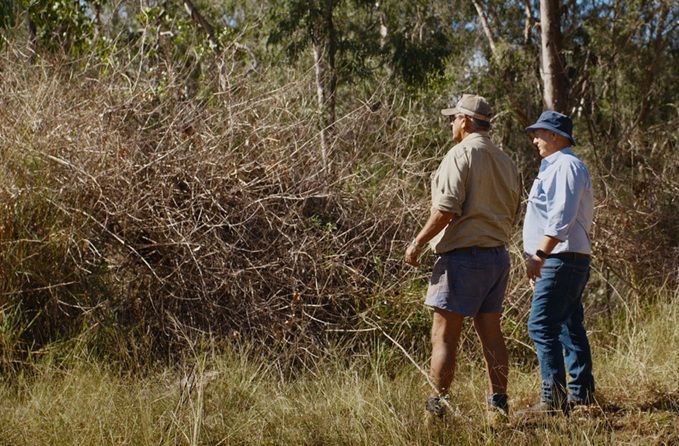
Invasive woody weeds steal your pasture. Method helps you take it back.

High-precision GNSS has typically been too costly and complex for all but the most critical agricultural operations, but recent RTK GNSS innovations have made centimetre accuracy scalable to all applications in Ag-Tech.

Every Aussie farmer knows that the difference between a “good” crop and a “record-breaking” one often come down to the smallest details. At BioFlora, we’ve spent years perfecting the balance of plant nutrition, and the result is IsoGreen – our powerhouse liquid formula designed to push your yields and crop taste to their absolute peak.

Plant, spray and harvest with confidence using reliable centimetre level positioning. Hexagon SmartNet provides fast, accurate RTK corrections across Australia to reduce overlaps, lower input costs and maximise productivity. With no base station required, simply connect, get a fix and get to work.

Built for the demand of Aussie farmers. Designed for every day performance.
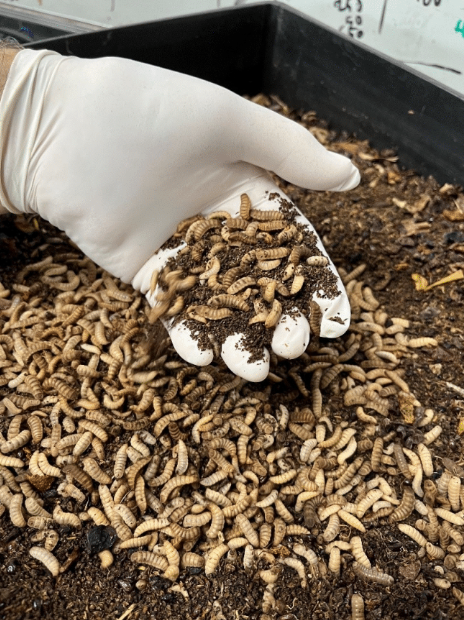
They’re wriggly black grubs more commonly tossed to backyard hens than served at the dinner table, but black soldier fly larvae could soon play a key role in building a more sustainable food system, according to new research from Adelaide University.