
























































1MG FlippingBooks
The intersection of agriculture and business
Boundless Plains to Share
As the mining boom has gone off the boil, we’ve heard a lot about the coming ‘dining boom’. In recent times, many experts have identified agribusiness as the next big industry for the Australian economy. But just what is agribusiness? Asks Jan Davis, former CEO of both Agribusiness Australia and the Tasmanian Farmers and Graziers Association.
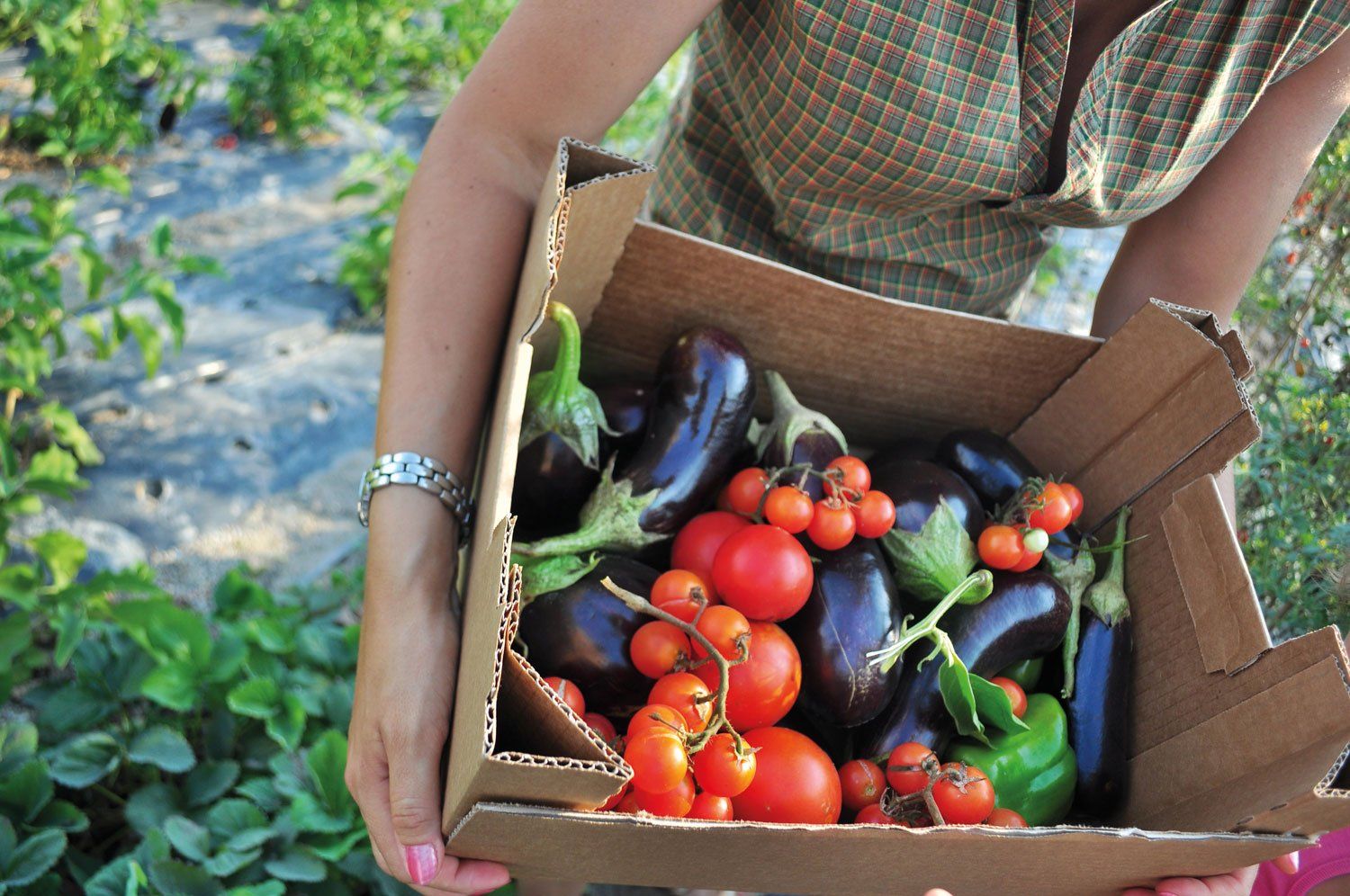
Agribusiness is defined as the business sector encompassing farming and agriculture-related commercial activities – all the steps required to get an agricultural product from paddock to plate, or from farm to fork.
It covers the supply of agricultural inputs, the production and transformation of agricultural products and their distribution to final consumers. It includes suppliers of farm inputs such as agrichemicals, plant and animal breeding, seed supply, crop production (farming and contract farming) and farm machinery. It also includes businesses that are involved in the marketing and distribution of farm products, such as warehouses, wholesalers, processors, retailers and more. As well, it extends to the financial services, consulting and advisory sectors.
Agribusiness activity is as a rule characterised by base raw materials that are perishable, variable in quality and not regularly available. The sector is subject to stringent regulatory controls on consumer safety, product quality and environmental protection.
Business efficiencies in the sector are driven by increasing cost/price squeezes and rapidly developing technologies. This has meant that traditional production and distribution methods are being replaced by more closely coordinated and better planned linkages between agribusiness firms, farmers, retailers and others in the supply chains. As a result, the term ‘agribusiness’ is most often used to emphasise the interdependence of these various sectors within the production chain.
However, among critics, agribusiness is often used in a negative sense; synonymous with so-called ‘corporate farming’, which is depicted as large-scale, industrialised, vertically integrated food production. As such, it is often contrasted with the family-owned farm business model.
Data released by the Australian Bureau of Agricultural and Resource Economics (ABARES) in 2016 confirms that family farms remain the backbone of Australian agriculture – despite a declining number of farms, increasing foreign and corporate ownership and a trend towards large-scale enterprises.
The best and biggest family-owned farms are also as profitable as corporate farms. In fact, many family farms outperform corporate farms, generating higher rates of return and profits over recent years. Family farms have also provided most of the capital that underpins the $60 billion Australian farm sector.
Every year, more than $2 billion is added to the value of the productive assets of the Australian farm sector. Between 60 to 70 per cent of that investment is provided directly by the owners of family farms; with less than 20 per cent coming from the corporate sector, including foreign investors. In fact, foreign investment in Australian farmland has remained constant over many years. The current situation is that only one per cent of our agricultural businesses and 11.3 per cent of our agricultural land are foreign-owned – hardly the tsunami some would have us believe.
The official data show that around 90 per cent of farms are family owned and run by one or two people. These farms on average generate less than $1m each annually, and grow half of the nation’s food and fibre. In contrast, just 10 per cent of farms – all much larger enterprises valued at $10m plus – generate the other half of rural production.
While many of these bigger enterprises started as family farms, they are now more likely to have complex multi-generational ownership, to be run over several properties, or to have corporate investors and/or management.
The take-out message from the research is that there is little difference between high performing family-owned farms and corporate farms. While the line between the two is in some respects becoming more and more blurred, corporate agriculture won’t be transforming the family farm model in Australia any time soon.
Having said that, the industry is nonetheless undergoing significant change.
As global population marches towards 9 billion in 2050, never has the task of feeding people been more urgent – or more daunting. The United Nations Food and Agriculture Organisation has estimated that feeding this increasingly crowded world means international food systems will need to produce 70 per cent more food.
In Australia, even though our domestic population is increasing, agribusiness is under pressure. Input and compliance costs are higher than our competitors, and rapidly changing market signals are often poorly understood on the supply side of the food value chain. Valuable agricultural land is being lost as our population grows and farms on the fringe of cities are gobbled up by housing developments. In addition, a changing climate limits the range of sustainable production in some areas.
At the same time, agricultural productivity is stagnating. From an average of around 2.9 per cent per annum growth in the years between 1991 and 2000, it fell back to 1.4 per cent in the decade to 2011, and now sits below the world average of 1.7 per cent.
So, to stay in the game, Australian agribusiness will need to do more with less. The only way we can keep pace with increased demand is by ramping up productivity growth – through improved production or yield, and improved management of existing land and food resources.
Agribusiness is the next frontier for the “innovation” economy, and the terrain is as vast as some of our farms.
Ag-tech with its proliferation of novel, high-tech data gathering techniques – such as drones, sensors and GPS tracking devices – will provide the tools for unlocking the next wave of productivity gains.
Mick Keogh, executive director of the Australian Farm Institute, says the ability to capture digital information at the farm gate is growing rapidly: drones, irrigators that monitor plant health and water requirements, GPS guided tractors, walk-over weighing scales – all these things allow us to capture a huge amount of data associated with farm production. The key, he says, is turning that flood of information into sensible, decision-supporting tools.
The advent of digitised agriculture means farmers now have the ability to gain control over their farms in ways they would never have dreamed possible even a decade ago. Australian researchers and farmers are developing all sorts of data-driven applications to reduce costs and optimise land and water use. Farmers accustomed to speaking in terms of paddock or herd averages now have the ability to monitor and control inputs with far greater precision. In fact, in many cases, it is now possible to manage decisions down to the level of the individual plant or animal.
“If you control everything to the optimal level, you increase productivity – it’s the old industrial principle that Henry Ford was on to,” says Keogh. “Digital technology really allows agriculture to do that.”
Applied across farm management in Australia, these new forms of digital agriculture will potentially add billions to farm profits and to the agribusiness sector more broadly. This new precision toolkit has meant many young farmers are approaching farming with a newfound optimism, reflected in the recent increase in enrolments in agricultural studies at tertiary level.
Agriculture has delivered five consecutive years of strong growth; and forecasts for 2016 anticipate a record output of $57.6 billion in raw product forecast – up 8 per cent on the previous year.
The opportunities for the agribusiness sector are enormous. We sit on the edge of the fastest-growing region in the world; we have world-class food safety and environmental credentials; we’ve got modern technologies; and we have a strong economy and employ skilled labour.
However, if we are to capture these opportunities, significant investment will be needed from both public and private sectors.
Given the relative immaturity of technology and data solutions, there is a pressing need for increased funding for R&D and for collaboration across the value chain. There is also a need for investment in basic infrastructure. In many areas, leveraging ag-tech to reap productivity gains will require faster internet access. Transport and logistics are also high on many lists.
It is also clear that a supportive business environment is critical for addressing the challenges ahead. Improved knowledge and understanding of this business environment leads to formulating better strategies that make business transactions more efficient. These conditions will generate a climate in which participants in the agribusiness value chain can operate and grow, and – as a result – facilitate entrepreneurship, increase investment, and enhance market competitiveness and growth.
NEWS
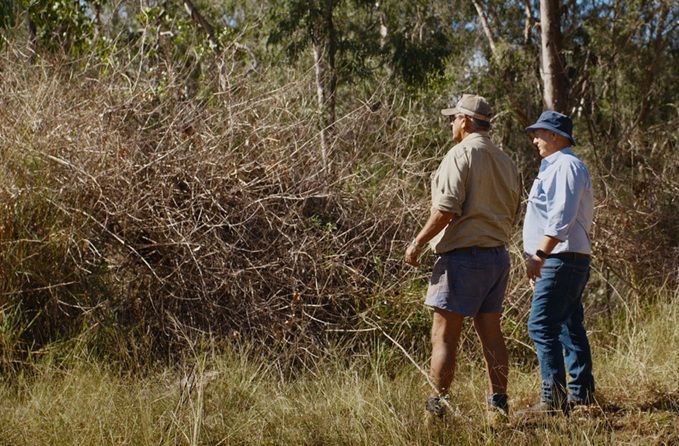
Invasive woody weeds steal your pasture. Method helps you take it back.
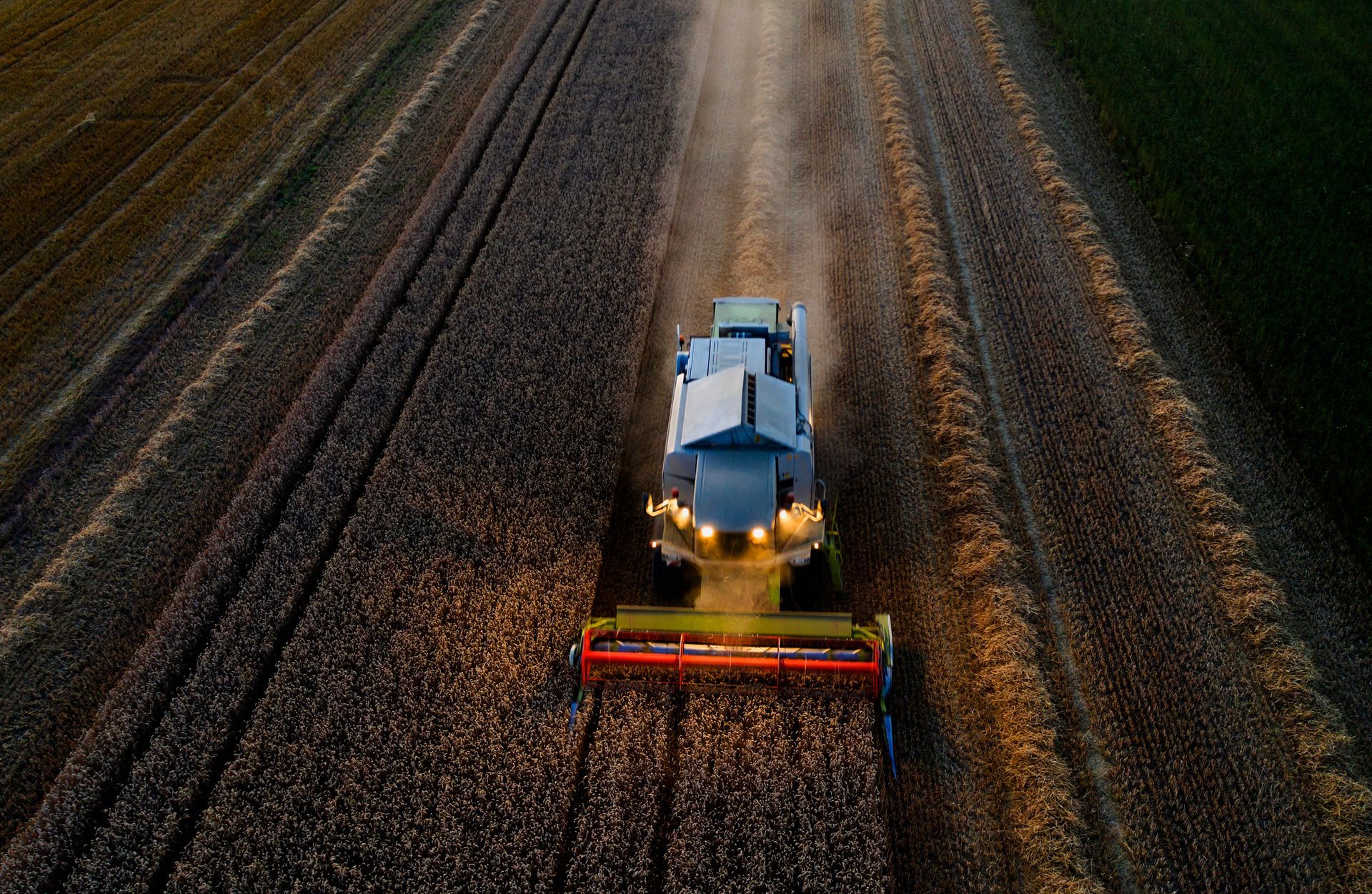
High-precision GNSS has typically been too costly and complex for all but the most critical agricultural operations, but recent RTK GNSS innovations have made centimetre accuracy scalable to all applications in Ag-Tech.

Every Aussie farmer knows that the difference between a “good” crop and a “record-breaking” one often come down to the smallest details. At BioFlora, we’ve spent years perfecting the balance of plant nutrition, and the result is IsoGreen – our powerhouse liquid formula designed to push your yields and crop taste to their absolute peak.
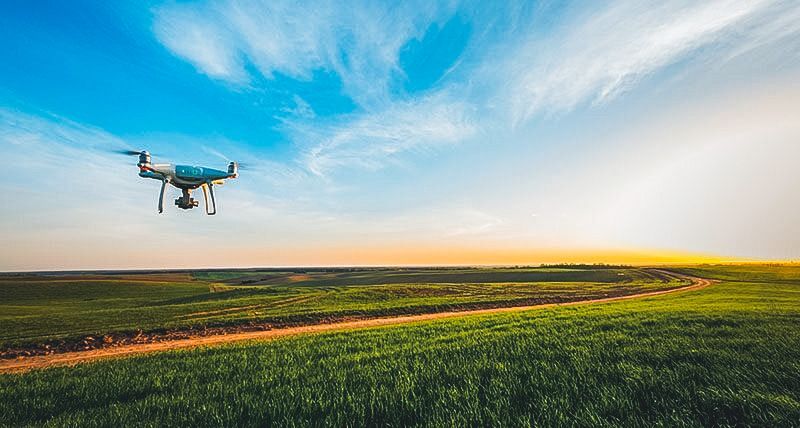
Plant, spray and harvest with confidence using reliable centimetre level positioning. Hexagon SmartNet provides fast, accurate RTK corrections across Australia to reduce overlaps, lower input costs and maximise productivity. With no base station required, simply connect, get a fix and get to work.

Built for the demand of Aussie farmers. Designed for every day performance.
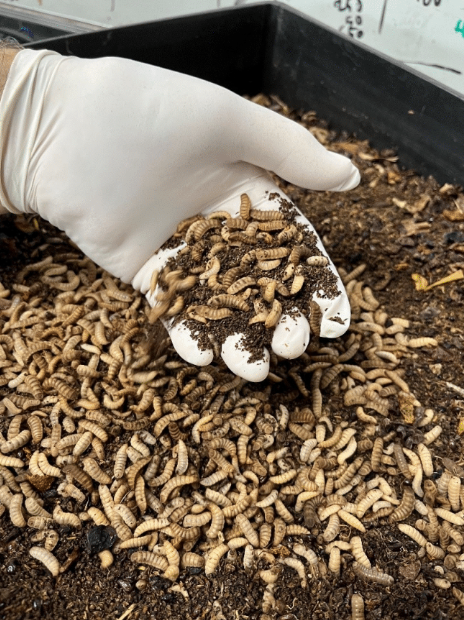
They’re wriggly black grubs more commonly tossed to backyard hens than served at the dinner table, but black soldier fly larvae could soon play a key role in building a more sustainable food system, according to new research from Adelaide University.