


















































1MG FlippingBooks
Australian agriculture’s role as a sustainability leader in global trade systems
Katie McRobert
In a disrupted geopolitical trade system looking for trusted, consistent, values-aligned partners, Australian agriculture has a unique value proposition to offer.

Australia’s agricultural sector has never had the luxury of stability. Producers operate at the intersection of climatic extremes, volatile international markets, and shifting global expectations about the environmental credibility of food and fibre. Yet it is this exposure — to deregulated markets, demanding production conditions, and global competition — that has shaped Australia into one of the world’s most resilient and innovative agricultural exporters.
This gives Australia a distinct role in a world now grappling with food system uncertainty. Economic pressures, geopolitical tensions, and contested sustainability frameworks are unsettling long-held assumptions about what constitutes reliability in a trading partner. Global value chains are seeking suppliers who can demonstrate transparent, measurable sustainability outcomes without compromising productivity or affordability.
Across recent Australian Farm Institute (AFI) interactions with stakeholders, policy leaders, international counterparts, and private-sector market participants, a consistent theme has emerged: Australia’s experience offers a model for how to integrate sustainability, trade competitiveness, and innovation in a way that is grounded rather than ideological.
Our strengths have not been designed in boardrooms — they have been forged through decades of deregulation, exposure to global markets, and farmer-led adaptation. This is the foundation from which Australia can lead.
A trading nation shaped by deregulation
Few agricultural economies have deregulated as extensively or as boldly as Australia’s. Over several decades, the removal of commodity boards, price supports, and many forms of supply-side market intervention have forced producers and agribusinesses to compete on efficiency, quality, and innovation. While the process was difficult — and remains politically sensitive — the long-term effect is unmistakable: Australian agriculture is internationally competitive, because it has to be.
Australian producers face world prices, world costs, and world scrutiny. They operate without the insulation provided to many competitors in North America, Europe, and parts of Asia, where subsidies and market protections still buffer producers from volatility. Australian farmers receive among the lowest levels of government support in the OECD, and yet continue to deliver strong productivity gains and record-high output value. This experience matters now more than ever.
In a global environment marked by tariff oscillations, geopolitical leverage, and new forms of non-tariff sustainability-related measures, the countries that thrive will be those whose agricultural sectors are accustomed to adjusting quickly. Australia’s deregulated system has produced precisely that capability: businesses that can scale, pivot, remain profitable, and manage risk in ways that subsidised systems struggle to match.
Competitiveness in a world of non-tariff pressure
While traditional tariffs remain politically potent, the real trade pressures for agriculture are increasingly found elsewhere: in carbon accounting requirements, supply-chain emissions expectations, biodiversity safeguards, water-use reporting, deforestation rules, packaging mandates, and other emerging sustainability measures.
The AFI’s recent engagement in international policy forums and bilateral dialogues provides a window into the complexity and nuance of this shifting landscape.
Despite a shift in political sentiment away from sustainability efforts (in some but not all regions), global food brands are placing mounting emphasis on verifiable emissions profiles and demonstration of nature-positive land management. Traceability systems that link paddock-level action to global reporting, and transparent, outcomes-based sustainability metrics, are an advantage in meeting these supply chain expectations.
However, in some cases these well-intentioned efforts to address climate and biodiversity concerns risk morphing into de facto market barriers — particularly when measurement requirements outpace the ability of producers to comply or when policy frameworks rely on prescriptive practices rather than actual outcomes.
Australia has a strength to play here. Because our agricultural system has long operated with minimal public support, Australian producers tend to have leaner cost structures, higher input efficiency, and lower emissions intensity per dollar of output than many competitors.
Decades of precision in land use, water management, and input optimisation mean that Australian agriculture can often demonstrate sustainability outcomes with integrity rather than compliance-driven box-ticking. Our sustainability credentials are commercially authentic, not manufactured.
Innovation as adaptation
Much commentary on agricultural innovation focuses narrowly on new technologies, new partnerships or new research and development structures. Australia’s innovation advantage is not defined solely by institutional architecture. It stems from a deeper cultural and economic dynamic: innovation as survival.
Australian producers have been early adopters of precision technologies, data-informed decision tools, variable rate input systems, water- and nutrient-efficient practices, and soil stewardship approaches - not because they are fashionable, but because margins demand it. The constraints of the Australian environment — rainfall variability, soil fragility, labour shortages, distance to market — have consistently rewarded adaptive thinking.
The AFI’s interactions with global counterparts show that many countries are now confronting the types of systemic constraints we have lived with for decades. Climate-driven volatility is flattening productivity trends across several major exporters; policy swings are undermining long-term investment confidence; consumers are increasingly sceptical of opaque supply chains. Innovation systems that serve only researchers or only corporate supply chains are proving insufficient.
Australia’s experience instead illustrates how innovation becomes embedded when:
- producers have ownership of problem-definition
- public and private investment are aligned with practical needs
- sustainability and productivity are treated as mutually reinforcing, not zero-sum
- frameworks enable flexibility rather than lock producers into prescriptive pathways
This is the kind of innovation ecosystem that volatile global markets now reward — nimble, distributed, farm-led, and anchored in commercial reality.
One of the most significant themes from recent AFI discussions in North America was the expanding role of global brands in driving sustainability through their supply chains. Many companies now recognise that the majority of their emissions lie upstream in farming systems, and are funnelling investment, data-sharing, and partnership models toward the farmgate as a result.
Australian producers — already accustomed to precision tools, lean cost structures and sustainable input efficiencies — are well positioned to benefit from this shift.
This alignment of sustainability with profitability is Australia’s sweet spot. When environmental improvements also strengthen yields, reduce risk, or secure market premiums, adoption is rapid and durable. And when farmers can demonstrate outcomes without being boxed into prescriptive systems, trust grows on both sides of the farm-consumer divide.
Reliability and credibility
In the AFI’s engagement with government officials, industry representatives, and agrifood leaders around the world, a striking theme has begun to surface: sustainability is increasingly being interpreted through the lens of reliability.
Countries grappling with food inflation, disrupted global supply chains, and geopolitical risk are looking for trading partners who can deliver consistency as well as credibility. Australia’s ability to maintain production and export continuity through climate impacts, energy shocks, and shifting market access conditions has not gone unnoticed. Reliability is emerging as a form of geopolitical value.
For Australian producers, sustainability has never been solely ecological and has long encompassed economic resilience as well as social responsibility. Many of our trading partners are now asking questions related to these sustainability traits:
- Can a country maintain supply during climate extremes?
- Can it provide transparency without compromising competitiveness?
- Can it demonstrate stewardship in ways that build, rather than erode, trust?
While Australia can answer “yes” credibly across all dimensions, global discussions are converging on a central question: how do we measure sustainability in ways that are scientifically robust, commercially feasible, and internationally interoperable?
From carbon accounting to biodiversity metrics to water stewardship indicators, the world is searching for consistency. Different economies are moving at different speeds, driven by diverse political, environmental, and economic motivations. Here, Australia’s advantage lies in two factors:
- Evidence-based measurement traditions, shaped by a scientific community with deep agricultural expertise. Across soil carbon, water efficiency, livestock emissions, and land management, Australia brings decades of data-driven, science-based practice.
- A farm sector culturally aligned with outcomes over prescriptions. Producers prefer frameworks that articulate “what good looks like” and allow flexibility in achieving it; global markets increasingly seek the same. This aligns Australia with future-oriented trade partners seeking credible, outcome-based sustainability demonstration rather than rule-heavy compliance regimes.
Many jurisdictions are struggling with measurement credibility, farmer trust, and administrative cost. Australia offers a pragmatic middle pathway: rigorous enough to be trusted; flexible enough to be adopted; grounded enough to avoid protectionist misuse.
Finding common ground in shared values
Australia has been an early mover in developing sustainability frameworks that align with international expectations while remaining practical for producers. While sustainability initiatives can create mistrust when they become proxies for disguised protectionism, Australia’s approach is the antidote to that risk: collaborative, transparent, farmer-centred, and grounded in evidence rather than ideology.
Initiatives such as the Australian Agricultural Sustainability Framework (AASF) and the APEC Sustainable Agri-Food Systems principles play an important role in anchoring conversations about agricultural sustainability. These help articulate the core values that sit beneath environmental, social, human, and economic wellbeing without forcing producers into rigid or overly prescriptive models.
Industry-specific sustainability frameworks have also been developed across a broad spectrum of Australian agricultural commodities, unified by the national framework of the AASF (which also reflects the sustainability expectations of global markets). These frameworks establish shared values and signals and guide voluntary alignment across government, industry, and community initiatives.
Australia has been a global leader in advocating for outcomes-based approaches and shared-value frameworks, and our willingness to share what we’ve learnt is strengthening regional connections – particularly across the Indo-Pacific and South East Asia.
How Australia can lead the next phase of sustainable trade
Leadership in global agricultural sustainability will not be defined by the loudest politics or the most complex standards. It will belong to those who prove reliability in supply, demonstrate verifiable sustainability outcomes, innovate at the pace of climate and market change, maintain trust with producers and consumers, and demonstrate positive links between environmental and economic performance. Australia has all the ingredients to do so.
Based on the AFI’s recent engagements and the insights shared across international dialogues, three strategic opportunities stand out:
- Position sustainability as a value proposition, not a compliance cost Australia can show the world that sustainable production is compatible with — and often enhances — profitability and resilience. ‘Sustainability’ in an Australian farming system is embedded in best practice management of resources (biophysical, human, intellectual and financial).
- Advocate for outcomes-based, non-protectionist sustainability standards Australia’s ‘shared values’ approach (exemplified in the AASF) offers a counter to prescriptive measures that risk distorting trade. By championing measurable sustainability outcomes in international fora, we can help shape global frameworks that are fair, credible and accessible to diverse production systems.
- Strengthen trust infrastructure for global markets Australia’s public and private investment in traceability systems and reporting processes gets us closer to the goal of trusted information exchange. This includes providing transparent data pathways and consistent reporting signals, fostering cross-border collaboration, and supporting mechanisms that allow producers to demonstrate sustainability without excessive burden.
In all of this, Australia’s real comparative advantage is authenticity. Our sustainability story is grounded in what farmers already do, what markets already value, and what global systems increasingly require.
A moment to step forward
Global agriculture is moving into an era defined by climate volatility, contested policies, and a greater expectation of transparency across supply chains. At the same time, trading systems are being reshaped by geopolitical realignment and a proliferation of sustainability-linked requirements.
Across many of the AFI’s global discussions, food has emerged as both a point of connection and a source of tension. The trade of food should, in principle, help to bind markets across borders. However, it’s increasingly being dragged into the realm of strategic competition. Exporting nations that were once viewed as steady contributors to global food security now face a more complicated role, as tariffs, export restrictions and other trade measures turn food into leverage.
In this context, the ability to deliver stable, predictable supply is becoming just as important to global food security as the volume of production itself.
The world is looking not for utopian narratives, but for trusted partners who can consistently supply, quickly adapt, and collaboratively improve. Australia has something of unique value to offer: a real-world example of how a deregulated, climate-exposed agricultural sector can remain competitive, innovative and resilient while delivering meaningful sustainability outcomes.
Katie McRobert has been with the AFI team since 2017, becoming Executive Director in 2024, where she leads evidence-based policy research to support the sustainability of agricultural systems.
NEWS
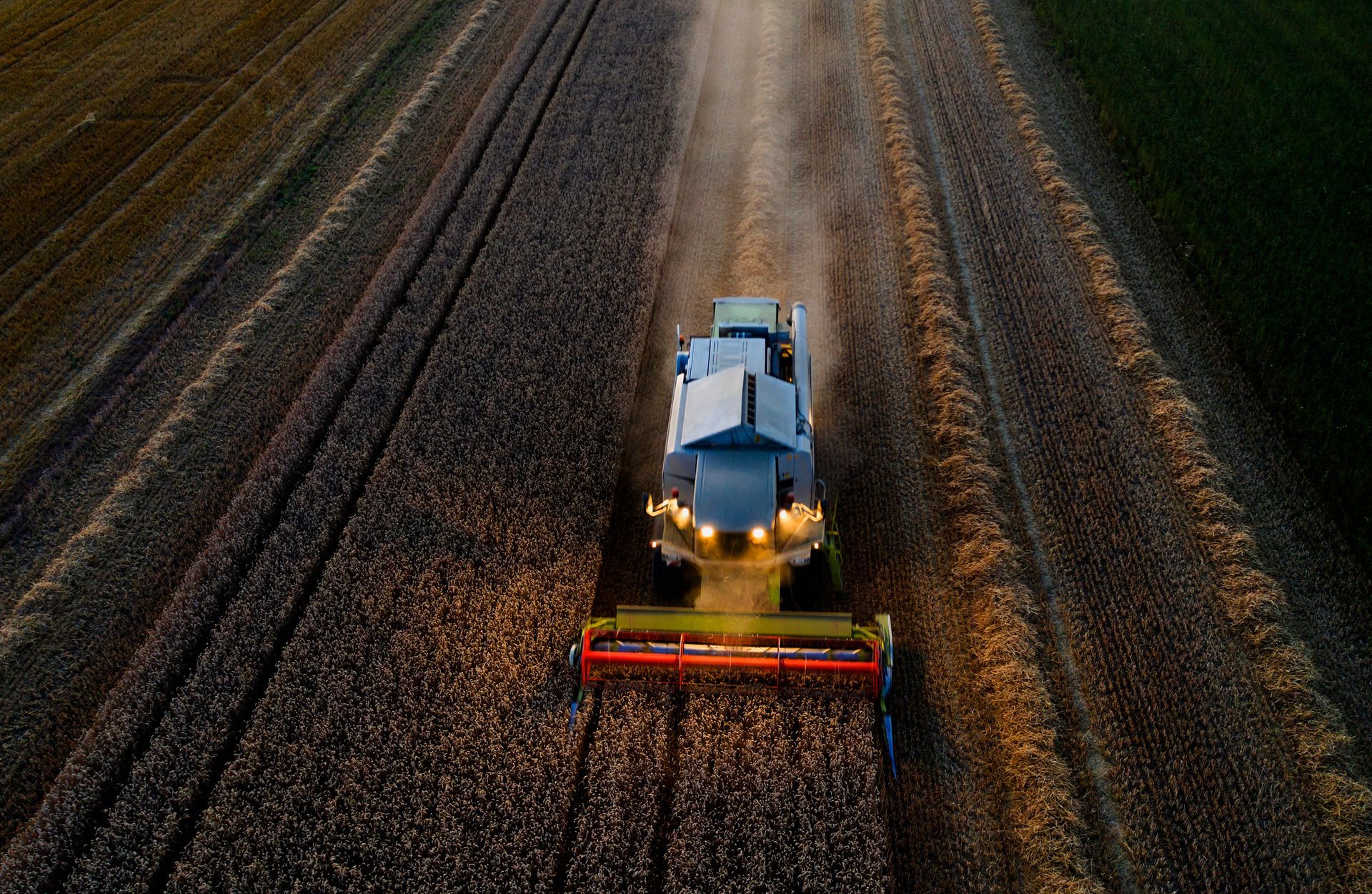
High-precision GNSS has typically been too costly and complex for all but the most critical agricultural operations, but recent RTK GNSS innovations have made centimetre accuracy scalable to all applications in Ag-Tech.

Every Aussie farmer knows that the difference between a “good” crop and a “record-breaking” one often come down to the smallest details. At BioFlora, we’ve spent years perfecting the balance of plant nutrition, and the result is IsoGreen – our powerhouse liquid formula designed to push your yields and crop taste to their absolute peak.
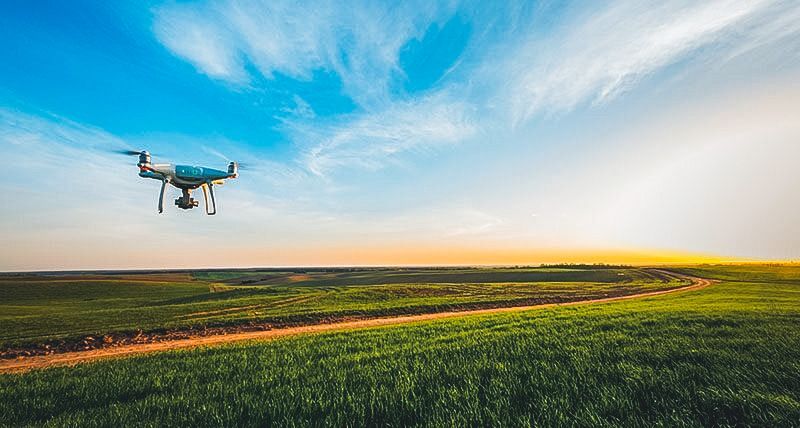
Plant, spray and harvest with confidence using reliable centimetre level positioning. Hexagon SmartNet provides fast, accurate RTK corrections across Australia to reduce overlaps, lower input costs and maximise productivity. With no base station required, simply connect, get a fix and get to work.

Built for the demand of Aussie farmers. Designed for every day performance.
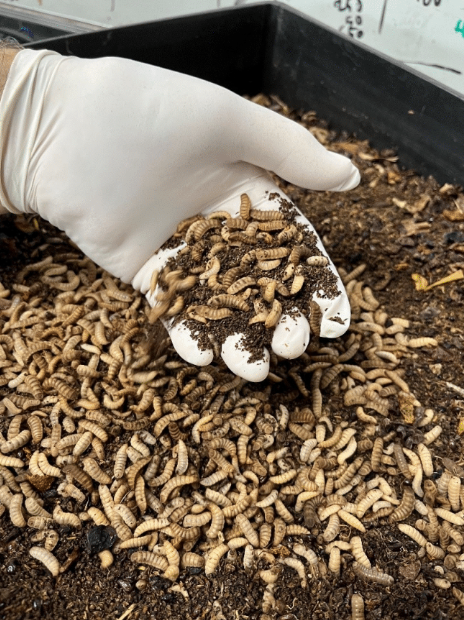
They’re wriggly black grubs more commonly tossed to backyard hens than served at the dinner table, but black soldier fly larvae could soon play a key role in building a more sustainable food system, according to new research from Adelaide University.
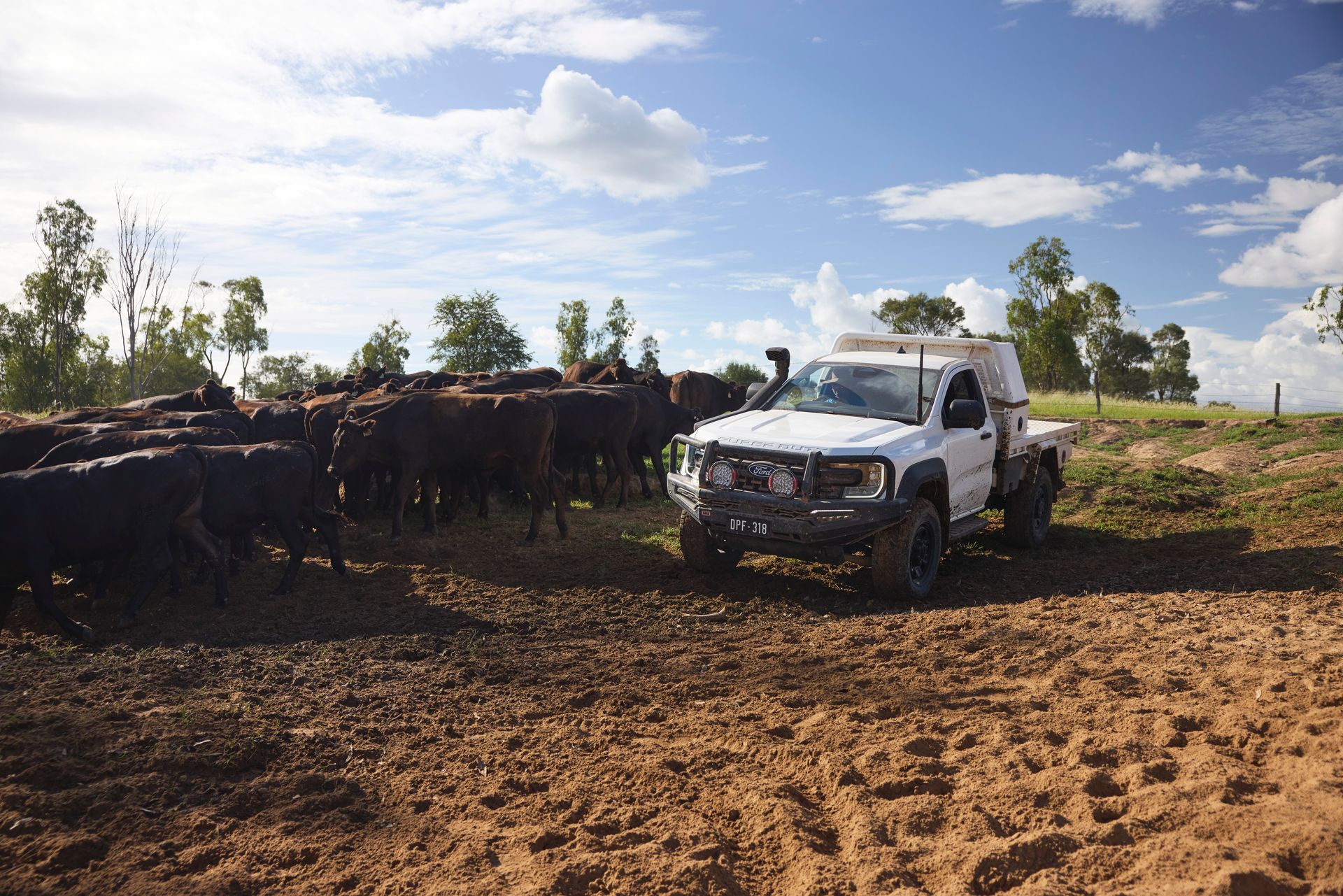
After four years of customer research and 500,000 test kilometres, Ford says the Ranger Super Duty brings farmer-driven customisation into the factory, with more towing, payload, and durability built in.