Improving mental health help for farmers in the face of increased droughts and rising temperatures

Professor Sarah Wheeler

Mental health issues in farmers are a rising concern, especially in the face of predicted increases in droughts and hotter conditions. We need to get better in dealing with and treating mental health conditions in rural communities. 

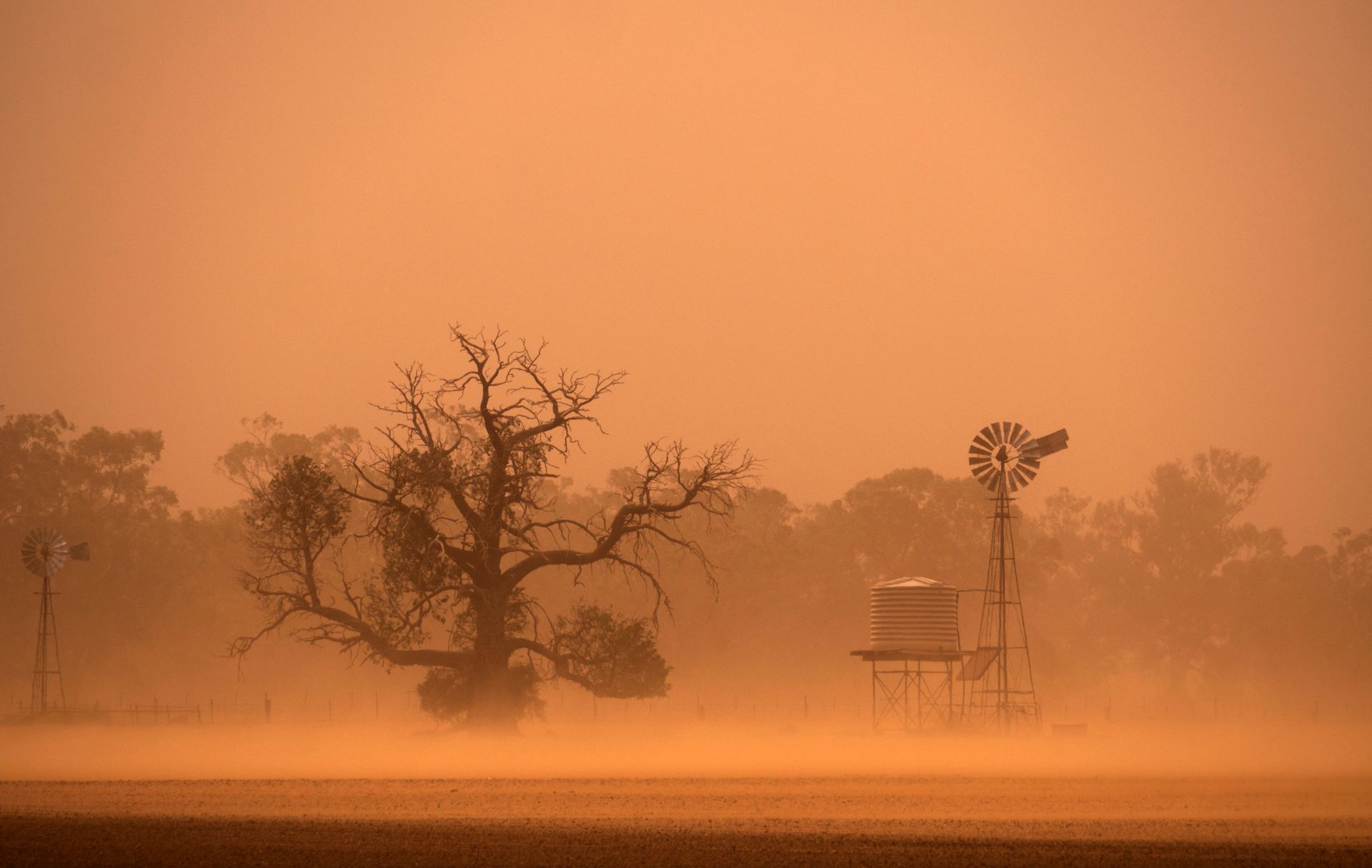
As the driest inhabited continent in the world, Australia regularly experiences rainfall deficiency, prolonged drought, and hotter temperatures with future change predicted to heighten these extremes. 


One area of growing concern is the link between the impacts of weather extremes on mental health, particularly in rural areas. 

Droughts result in reduced agricultural production, increased financial hardship, degraded environmental conditions, and reduced regional employment opportunities. As a result, droughts can induce post-traumatic stress disorder, anxiety and depression, with hotter temperatures negatively influencing the central nervous system and moods. 


Poor mental health is linked with higher suicide rates, and in Australia, the suicide rate in remote Australia has been found to be almost double that of major cities. 


In a study published by my team this year in Climate Change Economics, research in the Murray-Darling Basin of Australia found that an increase in extreme drought occurrence in the previous 12 months was strongly associated with the suicide rate increasing by almost a third. Moderate drought was also found associated with an increasing suicide rate, but only by a small margin.


Hotter temperatures were also positively linked to a rise in the total suicide rate. The more farmers within an area studied, the higher the suicide rate, and the suicide of males and younger age groups were more positively associated with extreme drought and higher temperatures.


A survey of 1338 farmers by Norco and the National Farmers Federation in February 2023 found similar findings. 


They reported that close to half of Australian farmers had thoughts of self-harm or suicide, with the three biggest factors affecting mental health being weather or natural disasters; financial stress; and inflation and cost pressures. 


Weather and natural disasters were said to have caused financial burden, negative impact on animals and loss of stock; and a difficult and costly rebuild and recovery process. 


As drought and other natural weather events progressively become more severe, as is predicted with future climate change predictions, we need to design more effective mental health interventions, as well as putting policies in place to deal with climate change. 


Many have emphasised the need for a systems approach to suicide prevention, which essentially means treating this issue as a complex whole while also accounting for the many constituent parts that often are interconnected and have interdependencies, as well as increased access to (and funding of) mental health support in rural communities.


Current interventions in the bush range from telehealth and medical services; to primary health networks services; to men’s sheds; to drought counselling. 


Breaking down deeply held stigmas around mental health issues, especially for men, is very important, and what also seems to be key is that farmers prefer talking to people whom they already have an existing relationship. Hence, there are calls for farmers to “check in on a mate” and create a “Farmers’ Army” of mental health advocates.


In addition, given the important interrelated relationship between weather and natural disasters and financial hardship, there is a need to promote: alternative forms of income on-farm (including from natural capital); drought preparedness; improved financial accounting and literacy; appropriate regional economic and social development policies; and aiding farm exit where necessary. Greater research in understanding the problem and its solutions is also critical. The aim is to try to create numerous ways in trying to deal successfully with this wicked problem, to work towards better mental health for all those in the bush.


If you or anyone you know needs help:

Lifeline on 13 11 14

Kids Helpline on 1800 551 800

Beyond Blue on 1300 224 636

Suicide Call Back Service on 1300 659 467

Headspace on 1800 650 890

ReachOut at au.reachout.com

MensLine Australia on 1300 789 978

Care Leavers Australasia Network (CLAN) on 1800 008 774

Head to Health at headtohealth.gov.au


Sarah Wheeler is a Matthew Flinders Professor of Water Economics in the College of Business, Government and Law in Flinders University, South Australia.

She has published a number of articles on farmer, children, and rural community mental health and suicide issues.

NEWS
December 18, 2025
Prodoz, a Proudly Australian and family-owned agribusiness, based in Melbourne, is strengthening its positions as national/international leader in advanced crop – science solutions through a growing portfolio of global innovation partners and a distribution footprint supported by all major distributors - includes Nutrien Ag, Elders, Lindsay Rural and Independent Rural stores.
December 18, 2025
Australia’s climate is tougher than ever. Heat spikes, dry periods, salinity, waterlogging and sudden frost events are becoming an everyday part of farmers lives.
December 17, 2025
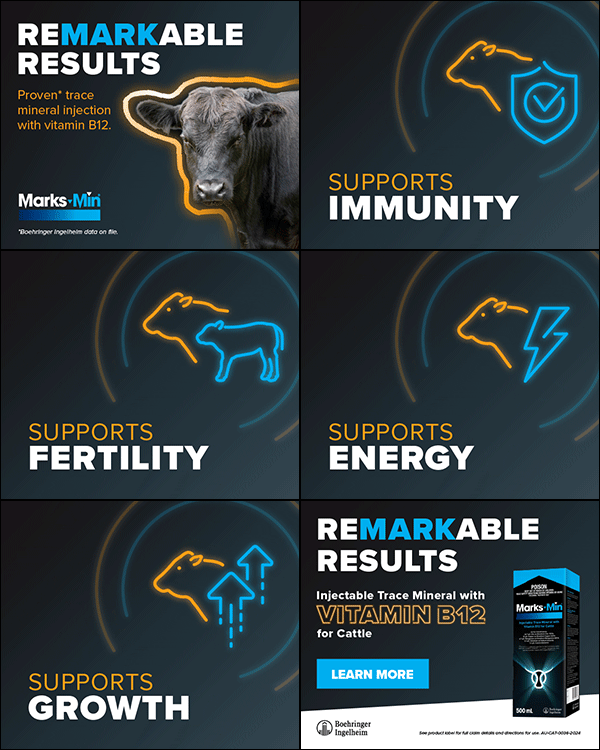
Trace minerals are required for optimal growth, reproduction, and immunity. Optimising trace mineral status relying solely on oral supplements across a herd may fail because of variation in individual intake and reduced absorption due to antagonism of other ration components and minerals. The use of injectable trace mineral supplements has been associated with positive reproductive outcomes including improved conception rate, increased odds of pregnancy and greater final in calf rate. A study conducted on 2,168 dairy cows, administered injectable trace minerals, four weeks prior to calving and again four weeks prior to the start of mating showed treated animals had a 3.3 per cent greater final in-calf rate, and a reduced time from start of mating to conception, compared to control animals 1 . The Importance of B12 Dr Carl Eden, Technical Services Veterinarian with Boehringer Ingelheim says “Vitamin B12 is sometimes referred to as a ‘super vitamin’ because it is only required in very small amounts but vital to many essential metabolic pathways. However, demand for B12 can vary considerably during the year and we see serum levels of B12 fall at critical times, such as the first few months after calving.” Vitamin B12 contains cobalt, so deficiency in cobalt can lead to deficiency in vitamin B12 because ruminants get most of their B12 as a byproduct of ruminal fermentation where the bacteria in their rumen assemble B12 from cobalt for use by the cow. Sub-optimal trace mineral and vitamin B12 status at calving, mating, and drying off has been shown to negatively impact growth, reproduction, and immunity. Using a trace mineral injectable containing vitamin B12 can improve trace mineral and vitamin B12 status at these critical times. Marks-Min with Vitamin B12 – The Evidence In the largest trace element study to date, Marks-Min Injectable Trace Mineral with Vitamin B12 demonstrated remarkable results when compared to a reference trace mineral injection. “Given the differences between Marks-Min and other products on the market, we wanted to generate a compelling data set to demonstrate how effective it was compared to the pioneer product. We entrusted this work to a third-party research company” says Dr Eden. “We chose farms that were at the top of their game from a reproductive perspective. We made sure that the farms had no evidence of trace element or vitamin B12 deficiencies or excess.” Across all outcomes of interest, Marks-Min demonstrated clear non-inferiority when compared to the reference product. Outcomes measured included submission, pregnancy and conception rates, and six week in-calf rate. Marks-Min demonstrated it is highly suited as an alternative treatment to the reference product. Reference: 1. Hawkins, D., and B. V. S. Franklin. New Zealand Dairy Veterinarians Newsletter 24 (2007): 12-16 Company website: livestockfirst.com.au Company email address: CustomerCare.Australia@boehringer-ingelheim.com Company video: https://vimeo.com/1138807630?fl=pl&fe=cm

December 17, 2025
Find out why the first summer drench can be so important in protecting your flock’s health, plus what to look for in your summer drench of choice.
December 17, 2025
A NSW-based innovator has developed a patent-pending, front-mounted firefighting and utility system for tractors, giving farmers instant, in-cab-controlled fire suppression, water and fuel on hand, and safer solo operations.
December 12, 2025
Barko Security is bringing drone technology to agriculture while building on a decade of security and a lifetime of agricultural know-how.
Show More